



Accurate labeling and tracking of milk samples play a vital role in the reliability of the somatic cell count test. Recent studies show:
- Proper labeling supports effective monitoring for intramammary infections.
- Careful tracking allows for correct interpretation by considering cow parity and days in milk.
- Reliable results help improve mastitis prevention and treatment.
Key Takeaways
- Accurate labeling of milk samples is crucial. Use waterproof markers to write cow ID, quarter sampled, date, and sampler name to ensure traceability.
- Immediate cooling of milk samples after collection preserves somatic cell integrity. Store samples at 7°C to maintain accuracy in somatic cell count test.
- Implementing standardized protocols for labeling and tracking improves data reliability. This leads to better herd health and higher milk quality.
Importance of Accurate Somatic Cell Count
Why Somatic Cell Count Matters?
Somatic cell count serves as a key indicator in the dairy industry for monitoring udder health and detecting mastitis. Dairy professionals use somatic cell count to identify subclinical mastitis, which often goes unnoticed without visible symptoms. Elevated somatic cell count levels signal an immune response in the udder, often due to infection. The presence of high neutrophil and lymphocyte percentages in milk samples correlates with increased somatic cell count values, especially during critical periods for udder health. Factors such as lactation stage and parity also influence somatic cell count and the composition of milk.
Dairy herds with consistently low somatic cell count demonstrate better overall health and productivity. Accurate somatic cell count results allow for early intervention, reducing the risk of severe mastitis and improving herd management.
Impact on Milk Quality
Somatic cell count directly affects milk quality and the economic success of dairy operations. Regulatory limits for somatic cell count in the United States set the maximum at 750,000 cells/mL, but many producers aim for less than 200,000 cells/mL to ensure high milk quality. Milk from healthy cows usually contains less than 100,000 cells/mL. High somatic cell count leads to changes in milk composition, including increased enzymatic activity, which causes off-flavors and reduces shelf life.
| Parameter | High SCC Milk | Low SCC Milk |
|---|---|---|
| Somatic Cell Count (SCC) | 849,000 cells/ml | 45,000 cells/ml |
| Lipolysis Rate | 3 times faster | N/A |
| Proteolysis Rate | 2 times faster | N/A |
| Sensory Defects Detected | Between 14 and 21 days | Maintained high quality |
| Quality Ratings | Low overall quality | High organoleptic quality |
Dairy producers supplying low somatic cell count milk often receive higher prices and better market access. Inaccurate somatic cell count results can lead to financial penalties, reduced milk quality, and even rejection of milk by processors. Maintaining accurate somatic cell count testing supports milk quality, herd health, and the profitability of dairy operations.
Milk Sample Labeling and Tracking
Labeling Milk Samples
Proper labeling of each milk sample is essential for achieving accurate somatic cell count test results. Dairy industry guidelines recommend a clear, step-by-step approach to labeling. After collecting a milk sample, the sampler should immediately seal and label the vial to preserve sample integrity. Using a waterproof marker, the sampler writes the cow identification and the specific quarter sampled, such as RF (right front), RR (right rear), LF (left front), or LR (left rear). The sampler’s name and the destination laboratory should also appear on the label for traceability. This process ensures that each sample remains linked to its source throughout testing.
Many dairy operations now use advanced labeling systems to reduce errors. Barcodes and RFID tags have become common tools for labeling. Barcodes allow for efficient tracking and differentiation of milk samples, reagents, and plates. RFID tags store detailed information about each sample, enabling real-time temperature measurement and rapid mapping in storage. These systems do not require line-of-sight and work well even in cold environments. By adopting these technologies, dairy farms improve the accuracy of sample management and reduce the risk of mix-ups.
Tip: Always double-check labels before moving samples to storage or transport. Errors in labeling, such as incorrect dates or missing information, account for a significant portion of recalls in food manufacturing.
Tracking Milk Samples

Tracking milk samples from collection to laboratory analysis ensures sample integrity and supports accurate somatic cell count test. A detailed procedure for sample collection, preparation, and environmental monitoring helps maintain consistency. Timestamping each step, from collection to delivery, provides traceability and accountability. Developing a comprehensive sampling plan, agreed upon by all parties, optimizes resources and reduces confusion, especially when untrained operators participate.
Digital tracking systems, such as barcoded or RFID-based management, automate verification and matching of samples. These systems significantly reduce human error compared to manual tracking, which relies on paper documentation and is more prone to mistakes. A suitable database should organize all recorded results and measurement protocols. Avoid using spreadsheets for data sharing; instead, use standardized formats like CSV for data analysis. Recording physiological variability in milk parameters and repeating measurements help identify instabilities and improve accuracy.
Regulatory agencies, such as Codex Alimentarius and the FDA, set standards for milk sample labeling and tracking. These agencies require clear labeling to protect consumer health and ensure transparency. Farms that implement standardized sample management protocols, like string sampling, achieve more accurate somatic cell count test results and enjoy better herd health and profitability.
| Regulatory Agency | Role in Milk Sample Labeling and Tracking |
|---|---|
| Codex Alimentarius | Establishes international standards for milk quality, hygiene, and labeling |
| FDA | Specifies labeling requirements for milk, ensuring transparency for consumers |
Preventing Contamination
Preventing contamination during sample collection and transport is critical for accurate somatic cell count test results. Contamination can introduce extra somatic cells, skewing results and leading to incorrect conclusions about herd health. The following best practices help maintain sample integrity:
- Wear gloves during sample collection.
- Remove three or four streams of milk from the quarter being sampled to minimize contamination.
- Brush dirt or debris from the udder and teats, and use an effective teat dip.
- Dry each teat thoroughly with a clean towel.
- Scrub the teat end with a gauze pad moistened with alcohol.
- Open the collection vial immediately before sampling, avoiding contact with the teat end.
- Collect 3 to 5 ml of milk, ensuring the vial is not overfilled.
- Clearly label the sample vials.
- Keep the collection vial on ice until delivered to the lab.
Contamination can occur even with small amounts of somatic cells, especially in samples with low cell counts. Each somatic cell contributes to the total DNA in the sample, which can affect the accuracy of the somatic cell count test. Careful analysis and repeated measurements help distinguish between true somatic cell counts and contamination.
Note: Handle all equipment, including transfer hoses and collection vials, with care. Cap and disinfect hoses after use to prevent cross-contamination.
Immediate Cooling Of Milk Samples
Immediate cooling of milk samples after collection preserves somatic cell integrity and ensures accurate somatic cell count test results. Samples should be cooled right after collection and stored under refrigeration at 7°C. Delays in cooling can lead to changes in somatic cell count, especially if samples remain at room temperature. Research shows that samples kept at 25°C begin to lose somatic cell integrity after six days, which can compromise test accuracy.
| Test Type | Optimal Temperature | Suitability for Cow-side Screening |
|---|---|---|
| Somaticell Test (ST) | 0–8°C | Not suitable for predicting IMI at dry-off and freshening |
| California Mastitis Test | N/A | Useful for diagnosing subclinical IMI at dry-off/early lactation |
Immediate cooling also helps prevent the formation of milk fat globules, which can interfere with somatic cell count test accuracy. Proper cooling keeps the sample stable and ready for analysis by the somatic cell count tester. Farms that follow strict cooling protocols consistently achieve more accurate somatic cell count results and maintain better herd health.
Remember: Consistent milk sampling practices, including immediate cooling, proper labeling, and careful tracking, support high-quality results and protect herd health.
Conclusion
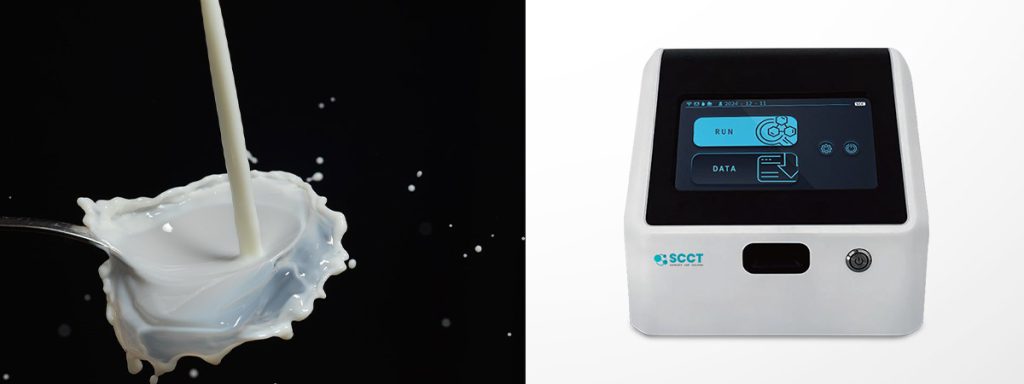
Consistent labeling, immediate cooling, and careful tracking of milk samples support accurate somatic cell count results.
The study indicates that proper sampling techniques and aseptic pooling can achieve contamination rates comparable to quarter milk samples, which supports effective herd health management by allowing for the identification of intramammary infections while reducing costs.
- Standardized protocols improve data reliability.
- Detailed procedures lead to more accurate results.
- Sensor technologies enhance monitoring.
- Structured databases support traceability.
Implementing these practices improves milk quality and herd health.
FAQ
How Should Dairy Workers Label Milk Samples?
Workers should use waterproof markers to write cow ID, quarter, date, and sampler name. Barcodes or RFID tags can improve accuracy and reduce errors.
What Happens If Milk Samples Are Not Cooled Immediately?
Delayed cooling can cause cell breakdown and inaccurate somatic cell counts.
Immediate refrigeration at 7°C preserves sample integrity and ensures reliable test results.
Can Milk Fat Globules Affect Somatic Cell Count Tests?
Yes. Milk fat globules may interfere with cell counting.
- Proper cooling and gentle mixing before testing help minimize this issue.