
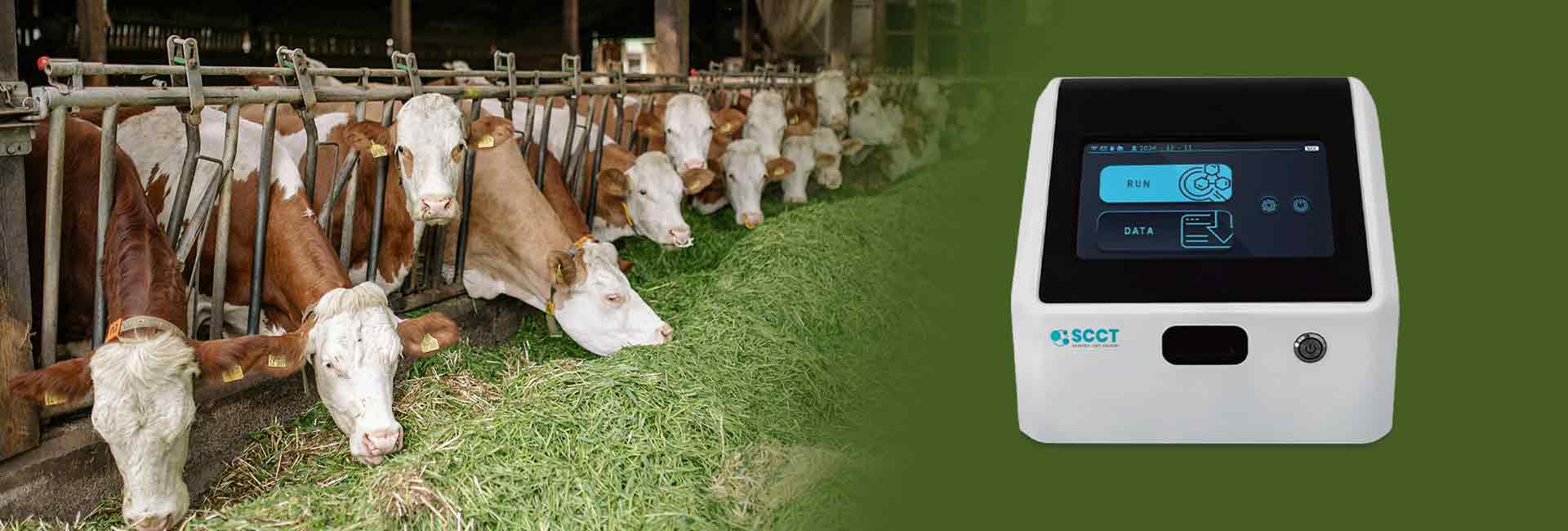


A somatic cell count tester with a compact and portable design allows users to perform quick milk analysis anywhere. Small size and light weight help users carry the device easily between barns or labs. Simple controls make the tester user-friendly, even for those with little technical experience. Fast results from a portable device support better milk quality decisions on-site.
Key Takeaways
- Somatic cell count tester enables quick and convenient milk analysis directly at the farm, improving decision-making for herd health.
- Lightweight and compact designs enhance mobility, allowing users to transport devices easily between locations without technical expertise.
- Battery-powered operation ensures functionality in remote areas, providing real-time results for immediate diagnostic decisions.
- Durable materials protect testers from harsh conditions, maintaining accuracy and reliability during frequent use in various environments.
- User-friendly interfaces and wireless connectivity streamline data management, making it easier to monitor milk quality and track trends.
Portable Somatic Cell Count Tester
Size and Weight
A somatic cell count tester offers significant advantages in milk analysis. Manufacturers design these devices to be lightweight and compact, which makes them easy to carry between barns, laboratories, and field sites. The following table compares the dimensions and weights of popular models:
| Product Name | Dimensions (mm) | Weight (kg) |
|---|---|---|
| Somatic Cell Count Tester | 230 x 215 x 245 | 2.7 |
| SOMACOUNT FC | 610 x 660 x 394 | 45.4 |
| LACTOSCAN Somatic Cell Counter | 390 x 300 x 260 | < 5.5 |
A lighter device enhances user-friendliness and allows dairy workers to transport it to remote locations. They can perform quantitative somatic cell counting directly at the point of milk collection. The compact size supports field-deployable diagnostics, which is crucial for accurate monitoring of somatic cells in various environments. Users do not need advanced technical skills to operate these devices, which increases accessibility for on-site milk quality testing.
Tip: Choose a device with a weight under 6 kg for optimal portability and ease of use in daily milk analysis.
Power and Battery
Somatic cell count tester relies on battery-powered operation. This feature allows users to conduct milk tests without access to mains electricity. Devices such as PortaReader and LACTOSCAN include rechargeable batteries, which support long hours of field work. Battery-powered operation ensures that the device remains functional during emergencies or in remote dairy farms. Some models also offer USB charging, which adds convenience for users who need to recharge the device quickly.
- Battery-powered devices provide real-time information for rapid decision-making.
- Users can perform milk diagnostics in locations where power supply is unreliable.
- Compatibility with mobile devices enables efficient data management and reporting.
The ability to operate independently from fixed power sources increases the accuracy and specificity of milk somatic cell testing in diverse environments.
Material and Durability
Manufacturers use robust materials to build somatic cell count tester. The device often features reinforced plastic or metal casings to withstand rough handling and frequent transport. Durability ensures that the device maintains accuracy and sensitivity over time, even in challenging field conditions. For example, DeLaval and LACTOSCAN models include water-resistant and dust-proof features, which protect the internal components during milk testing in barns or outdoor settings.
- Durable construction supports daily operations in milk analysis.
- Devices with disposable microchips simplify handling and reduce maintenance.
- Reinforced materials help maintain specificity and reliability in quantitative somatic cell counting.
A portable and affordable device with high sensitivity and specificity improves milk quality monitoring for both bovine and other dairy species. Users benefit from rapid, accurate, and diagnostic results that support better milk quality management.
Design Innovations
Miniaturization
Recent advances in technology have transformed the design of the somatic cell count tester. Engineers have focused on miniaturization to make milk analysis more accessible and efficient. Several innovations have contributed to this progress:
- Development of portable imaging devices allows users to perform cell analysis directly at the point of milk collection.
- Miniaturized fluorescence microscopes increase sensitivity and specificity while reducing the size of the device.
- CMOS sensors provide high accuracy in cell detection and enable compact construction.
- Smartphone technology integrates imaging capabilities, making quantitative diagnostics possible in the field.
- On-chip, lens-free microscopes offer a wide field-of-view and enhance portability for bovine milk monitoring.
These features help users achieve rapid and accurate somatic cell count. Miniaturization supports diagnostic applications in both laboratory and farm environments. Smaller devices improve milk quality monitoring and enable more frequent testing.
Wireless and App Integration
Wireless connectivity and mobile app integration have revolutionized milk testing. Devices now connect to smartphones and tablets, streamlining data management and analysis. Dairy Quality’s mobile app demonstrates how technology enhances the functionality of somatic cell count tester:
- The app supports various cell counts, including white blood cell differential and malaria parasite quantification.
- Usability testing shows that most users find the app easy to use and time-efficient.
- The app achieves a high usability score, indicating that it benefits healthcare and dairy practice.
Wireless features allow users to transfer milk test results instantly. Data storage and sharing become more efficient, improving accuracy and specificity in milk diagnostics. Users can monitor trends and maintain records for quality assurance.
Note: Wireless integration reduces manual data entry and minimizes errors in milk analysis.
User Interface

Somatic cell count tester features user-friendly interfaces that simplify milk testing. MRC Lab’s touchscreen tablet provides an example of intuitive design. The following tables highlight key interface features:
| Feature Description | Details |
|---|---|
| Operator-friendly software | Graphic user interface (Windows) for ease of operation |
| Standards-based computing | Flexible data output options |
| Data output options | Network connections formatted for existing systems |
| Feature Description | Details |
|---|---|
| User-friendly data analysis | Easy to use sorting program |
| Trend analysis tool | Excellent for tracking data trends |
| Graphic presentation | Visual representation of selected screens |
| Automatic database updates | Keeps data current without manual input |
| Extended data storage | Enhances storage capabilities of the device |
Touchscreen controls and graphic displays improve accuracy and efficiency. Users can navigate menus quickly and access diagnostic results with minimal training. Automatic updates and extended storage support long-term milk quality monitoring. These features increase specificity and sensitivity, making quantitative cell analysis reliable for both laboratory and on-farm applications.
Usability and Benefits
Field Testing
Portable somatic cell count testers have transformed milk analysis in dairy operations. Farmers and technicians use these devices to perform quantitative somatic cell counting directly at the point of milk collection. The smartphone-based somatic cell count tester, which uses microfluidic technology, delivers results in just 2 minutes. Researchers validated its accuracy against commercial cytometers, confirming its reliability for real-time monitoring. This speed and accuracy allow for immediate diagnostic decisions, especially in resource-limited settings.
The QuantM device enables on-site quantitative detection of somatic cells. Its affordable design and portability make it suitable for field applications, including small and medium-sized farms. Early detection of mastitis with this device helps reduce antibiotic use, supporting antimicrobial resistance mitigation. Portable testers provide instant results, eliminating the need for external laboratory services. For example, the California mastitis test takes only 2 minutes, while the Porta SCC quick test requires 5 minutes and offers high diagnostic values for intramammary infections.
| Benefit | Description |
|---|---|
| Efficiency | On-site testing provides immediate results, allowing for quick decision-making. |
| Cost-effectiveness | Long-term savings from reduced veterinary costs and increased milk production outweigh initial costs. |
| Improved herd health management | Early detection of mastitis and other health issues leads to better overall herd health. |
User Convenience
Dairy farmers and lab technicians appreciate the flexibility and ease of use offered by portable somatic cell count testers. These devices feature intuitive interfaces, such as touch screens, which simplify the test process. Users can perform milk diagnostics directly at the point of need, improving herd management and reducing mastitis incidence. The compact design and user-friendly controls benefit small and medium-sized farms, where mobility and convenience are essential.
The demand for portable analyzers continues to grow due to the need for on-site and real-time milk testing. Immediate results support quick decision-making and enhance milk quality monitoring. Integrated bacteria and somatic cell testers provide simultaneous results, increasing testing speed and accuracy. Fully automated processes minimize human error and ensure consistent reagent dosage, improving specificity and sensitivity.
| Feature | Benefit |
|---|---|
| Integrated bacteria and somatic cell tester | Provides instant, simultaneous results for both bacteria and somatic cell counts, enhancing testing speed. |
| More accurate than alternative methods | Fully automated process minimizes human error and ensures consistent reagent dosage. |
| Simple and flexible to use | Intuitive touch-screen operation simplifies the testing process, making it user-friendly. |
- Portable devices offer versatility and ease of use for dairy operations.
- Quick on-site results facilitate immediate decision-making.
- Affordable devices with high specificity and sensitivity improve milk quality diagnostics for bovine and other dairy species.
Buyer Considerations
Choosing a Tester
Selecting the right somatic cell count tester involves careful evaluation of features, accuracy, and cost. Buyers should compare different device types to match their needs for milk quality assessment and field-deployable diagnostic device use. The following table highlights key differences among popular testers:
| Tester Type | Key Features | Accuracy | Cost Consideration |
|---|---|---|---|
| DSCC | Uses cassettes, digital camera for counting | 10,000 to 4,000,000 cells/mL | High cartridge failure rate if mishandled |
| RT-10 | iPhone integration, uses cassettes | 10,000 to 4,000,000 cells/mL | High cartridge failure rate if mishandled |
| PC | Test strips with color change | Estimated SCC based on enzyme | N/A |
| CMT | Qualitative test with gel reaction | Scored results based on SCC | N/A |
| ECM | Measures resistance/density | ±2.5% accuracy | N/A |
| HC | Measures pH changes | ±0.05 pH accuracy | N/A |
Direct measurement methods, such as flow cytometry, offer high specificity but lack portability and affordability. Indirect methods may introduce errors due to uneven cell distribution. New microfluidic technology provides a low-cost solution with up to 97.07% accuracy, making it suitable for quantitative detection in milk quality monitoring. Devices like the LACTOSCAN somatic cell counter combine rapid analysis, touchscreen interfaces, and affordable operation, supporting both laboratory and on-farm use.
Tip: Buyers should prioritize accuracy, specificity, and ease of use when choosing a somatic cell count tester for bovine milk.
Consumables and Maintenance
Every somatic cell count tester requires consumables for ongoing operation. These include test chips, cassettes, and reagents, which directly affect the cost per test and the device’s diagnostic capabilities. For example, LACTOSCAN offers a low-cost solution with each test costing $0.3 to $0.5. Typical consumables include:
| Consumable Type | Quantity per Box/Kit |
|---|---|
| Milk somatic cell counter | 50 or 100 tests/box |
| Somaticchip | 4 – 100 tests |
| Lyophilized dye | 400 pcs |
| Pipette tips | 800 pcs |
Routine maintenance ensures the device delivers reliable results for milk quality assessment. Daily cleaning prevents dust buildup and fluid checks maintain proper operation. Weekly cleaning of apertures and decontamination reduce the risk of count errors and biofilm formation. Monthly system flushes and quarterly professional calibration help maintain specificity and accuracy. Annual lubrication of moving parts, if needed, extends device life.
- Regular maintenance supports high diagnostic performance and specificity.
- Proper consumable management keeps the device affordable and efficient for ongoing milk testing.
A well-maintained, affordable device with reliable consumables ensures accurate detection of high somatic cell count, supporting quality milk production and effective milk quality monitoring.
Conclusion

Compact and portable somatic cell count testers offer several advantages for milk analysis:
- They provide convenience for on-the-go testing.
- Farmers benefit from easy operation.
- Real-time assessments at the site improve herd health decisions.
Innovative features such as automated counters, digital connectivity, and integration with farm management systems support efficient and accurate monitoring. Buyers should prioritize portability and advanced technology when selecting a somatic cell count tester for dairy operations.
FAQ
What Is a Somatic Cell Count Tester?
A somatic cell count tester is a device that measures the number of somatic cells in milk. Dairy farmers and lab technicians use it to check milk quality and detect mastitis early.
How Does Portability Benefit Dairy Farmers?
Portability allows dairy farmers to test milk directly at the farm. They get fast results and can make quick decisions about herd health without sending samples to a laboratory.
Which Features Make a Somatic Cell Count Tester Durable?
Manufacturers use reinforced plastic or metal for the casing. Water-resistant and dust-proof designs protect the device during daily use in barns and outdoor environments.
How Often Should Users Perform Maintenance?
Users should clean the device daily and check fluids. Weekly cleaning of apertures and monthly system flushes help maintain accuracy. Annual calibration ensures reliable results.
Can a Somatic Cell Count Tester Connect to Mobile Devices?
Many modern testers offer wireless connectivity. Users can transfer data to smartphones or tablets, making record-keeping and trend analysis easier.