
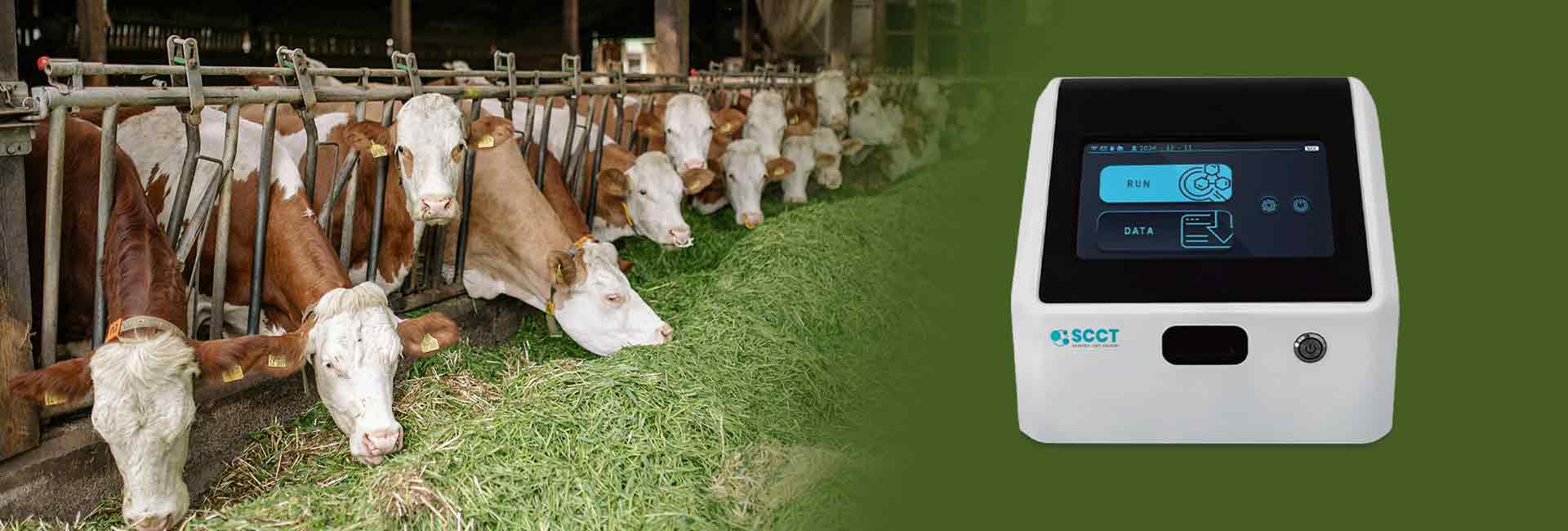



Dairy producers often face tough choices when selecting milk testing equipment, especially when comparing a somatic cell count tester with other testers. High somatic cell count can lead to decreased milk production, lower quality premiums, and even milk rejection by processors. Many producers want to know how key differences in testing tools impact milk quality and profits. The somatic cell count plays a crucial role, as herds with lower counts can yield significantly more milk and higher net income per cow. The table below highlights how different SCC levels affect milk quality and pricing:
| SCC Level (cells/mL) | Impact on Milk Quality | Impact on Pricing |
|---|---|---|
| Above 750,000 | Decreased quality, potential rejection by processors | Loss of quality premiums |
| Below 200,000 | High quality, favorable for processors | Higher profitability |
| 200,000 | Average quality, potential for reduced profits | Risk of lower income per cow |
Understanding these key differences helps producers make informed decisions that protect herd health and maximize returns.
Key Takeaways
- Somatic cell count tester provides rapid and accurate results, allowing dairy producers to quickly identify udder health issues.
- Lower somatic cell counts lead to higher milk quality and profitability, making regular testing essential for herd management.
- Portable somatic cell count testers are cost-effective and easy to use, requiring minimal training compared to laboratory devices.
- Frequent testing helps dairy producers maintain high milk quality and meet processor standards, ultimately supporting better herd health.
- Understanding the differences between testing devices empowers producers to make informed decisions that enhance milk production and income.
Key Differences Overview
What Sets them Apart?
Somatic cell counter for milk stands out from other milk testing devices in several important ways. These devices focus on measuring somatic cell count, which directly indicates udder health and milk quality. The design and function of a somatic cell count milk tester differ from other testers that may analyze fat, protein, or bacterial content. The table below highlights the key differences between these tools:
| Feature | Somatic Cell Count Testers | Other Milk Testing Devices |
|---|---|---|
| Portability | High | Low |
| Cost | Inexpensive | Expensive |
| Speed | Rapid | Slower |
| Accuracy | High | Variable |
| Required Expertise | Minimal | High |
| Sample Preparation | Simple | Complex |
Somatic cell count tester offers rapid results and high accuracy, making it accessible for producers who need quick decisions. Other devices often require more expertise and complex preparation, which can slow down the testing process. Producers benefit from the simplicity and reliability of somatic cell count tester, especially when monitoring herd health on a daily basis.
Why These Differences Matter?
The key differences between somatic cell count tester and other devices have a direct impact on dairy producers. High accuracy in measuring somatic cell count allows producers to identify problems early and take action before milk quality declines. Quick and simple testing supports better herd management and helps maintain low somatic cell count levels.
- Improved hygiene practices lower total plate counts in milk, which increases profitability.
- Producers with better hygiene knowledge consistently achieve higher milk quality and greater revenues.
- Regular manure removal, proper udder washing, and effective training programs support lower somatic cell count.
Note: Herds with lower bulk tank somatic cell count show clear advantages. For example, the best third of herds maintain an average somatic cell count of 134,000 cells/mL, compared to 284,000 cells/mL in the worst third. This difference leads to higher milk production and net farm income per cow.
Dairy producers who use accurate and rapid somatic cell count tester can respond quickly to changes in milk quality. This approach protects herd health and supports long-term profitability.
Somatic Cell Count Basics
What Is Somatic Cell Count?
Somatic cell count measures the number of somatic cells present in a milliliter of milk. These cells mainly include white blood cells and a small number of epithelial cells from the udder. The somatic cell count acts as a direct indicator of udder health. When a cow experiences an infection, the somatic cell count rises as the immune system responds. Early detection of changes in somatic cell count allows for prompt intervention and supports herd health.
A somatic cell counter for milk provides rapid detection of elevated cell levels. This tool offers high accuracy, which is essential for monitoring udder health. Farmers rely on the sensitivity and specificity of these devices to distinguish between healthy and infected animals. The somatic cell count also helps in the detection of subclinical mastitis, which often goes unnoticed without proper testing.
- Somatic cell count serves as a crucial indicator for udder health.
- Adjusted action thresholds for somatic cell count help in the detection of intramammary infections.
- Distinct somatic cell count levels appear in goats with S. aureus compared to those with minor pathogens.
Importance in Dairy
The somatic cell count plays a vital role in dairy production. High somatic cell count often signals chronic subclinical mastitis, which can reduce milk yield and quality. Early detection of increased somatic cell count enables dairy producers to take action before milk quality declines. The accuracy of a somatic cell counter for milk ensures that producers can trust the results for herd management decisions.
The following table summarizes research findings on somatic cell count and dairy herd health:
| Finding | Description |
|---|---|
| SCC and CSM Morbidity | Significant correlation found between herd somatic cell count and chronic subclinical mastitis morbidity. |
| Herd Size Impact | Differences in chronic subclinical mastitis morbidity observed based on herd size. |
| Milk Quality and Longevity | No association found between milk quality and longevity. |
A reliable somatic cell count tester provides early detection of udder infections. This supports better milk quality and helps maintain profitability. Devices with high sensitivity and specificity improve detection rates and reduce false positives. Farmers who monitor somatic cell count regularly can prevent the negative effects of high somatic cell count on milk production and herd health.
Regular monitoring of somatic cell count leads to early detection of problems, improved accuracy in herd health assessment, and better overall dairy outcomes.
Testing Focus
Parameters Measured
Somatic cell count testers focus on a specific set of parameters that directly relate to udder health and milk quality control. These devices measure the concentration of somatic cells in milk, which include white blood cells and epithelial cells. High somatic cell count often signals infection or inflammation in the udder. Other milk testing devices may analyze fat, protein, lactose, or bacterial content, but they do not provide the same level of accuracy in detecting udder health issues.
A somatic cell counter for milk offers rapid detection of elevated cell levels. This allows dairy producers to monitor changes in herd health efficiently. The accuracy of these testers ensures that even small increases in somatic cell count are identified quickly. Producers can then take immediate action to address potential problems. In contrast, traditional testers may require more time and expertise, which can delay detection and intervention.
Tip: Regular use of a somatic cell count tester supports early detection of mastitis, helping to maintain high milk quality and reduce losses.
Milk Quality

Milk quality depends on several factors, but somatic cell count remains one of the most important indicators. High somatic cell count negatively affects milk yield, casein content, and technological characteristics such as coagulation. The following table summarizes how somatic cell count correlates with key milk quality indicators:
| Indicator | Correlation with SCC | Notes |
|---|---|---|
| Milk Yield (MY) | Negative | Increasing SCC is associated with a reduction in MY due to damage to milk-producing cells. |
| Casein and Casein Index | Negative | High SCC leads to reduced casein synthesis and higher proteolytic activity. |
| Milk Conductivity | Positive | Increased SCC correlates with higher milk conductivity, indicating mastitis. |
| Milk Fat Proportion | Conflicting | Some studies report a reduction, while others find no significant variation. |
| Technological Characteristics | Negative | High SCC adversely affects milk coagulation and syneresis processes. |
Dairy producers rely on the accuracy of somatic cell count tester for effective milk quality control. These devices provide reliable detection of changes that impact both yield and processing characteristics. Early detection of rising somatic cell count helps prevent declines in milk quality and supports better herd management. By focusing on somatic cell count, producers can maintain high standards and meet processor requirements.
Technology and Methods
Rapid Results vs. Lab Accuracy
Portable somatic cell count testers have changed how dairy producers monitor milk quality. These devices deliver rapid results, which supports timely decision-making on the farm. High accuracy remains a top priority for producers who rely on these tools. The QuantM device, for example, demonstrates a strong correlation with traditional flow cytometry, showing a correlation coefficient of R² = 0.99. The slope value of 0.92 means the QuantM device aligns closely with laboratory methods. Bland-Altman analysis reveals minimal systematic bias, with a mean bias of 0.00092. This high accuracy allows producers to trust the results from portable testers.
Producers value high accuracy because it ensures reliable detection of changes in somatic cell count. Rapid results help identify udder health issues before they affect milk quality. Traditional laboratory analysis still offers high accuracy, but it often requires more time and resources. Portable testers now provide a practical balance between speed and high accuracy, making them essential for modern dairy operations.
- Portable testers deliver high accuracy and rapid detection.
- Laboratory methods maintain high accuracy but require more time.
- Producers can respond quickly to changes in somatic cell count.
On-Farm vs. Laboratory Use
On-farm testing with a somatic cell counter for milk offers several advantages. Producers can test milk samples directly on the farm, which saves time and reduces costs. The table below summarizes the main advantages and disadvantages of on-farm testing methods like the California Mastitis Test (CMT):
| Advantages of CMT | Disadvantages of CMT |
|---|---|
| Quick | Potential inaccuracies |
| Cheap | Costs of advanced methods |
| Simple | Limited pathogen identification |
On-farm methods provide quick detection, but some indirect methods may lack high accuracy. Coulter counting can face interference from bacterial cells. CMT only gives positive or negative results and does not identify specific pathogens. Despite these limitations, on-farm testing supports daily herd health management. Producers can use high accuracy devices for early detection and take action before problems escalate.
High accuracy in detection remains critical for both on-farm and laboratory testing. Producers who use portable testers benefit from rapid results and reliable detection of somatic cell count changes. Laboratory analysis still plays a role in confirming results and providing detailed information. Both approaches contribute to effective herd health management and improved milk quality.
Application and Use Cases
On-Farm Testing
On-farm testing plays a vital role in modern dairy management. Farmers use this approach to monitor somatic cell count and maintain milk quality control. The process allows for immediate detection of changes in udder health, which supports quick decision-making. Many dairy farms rely on on-farm testing for several key scenarios:
- Monitoring udder health to identify early signs of infection.
- Ensuring milk quality for cheese production, where low somatic cell count improves sensory properties and reduces spoilage from yeast and mold.
- Supporting routine milk quality control to meet processor standards.
On-farm testing with a somatic cell counter for milk provides rapid detection and helps farmers respond to problems before they affect the entire herd. This method reduces the need for laboratory visits and lowers costs. Farmers can perform detection daily, which leads to better herd health and higher milk quality. The ability to act quickly after detection of mastitis or other issues gives producers a significant advantage.
Diagnostic Effectiveness
Diagnostic effectiveness measures how well on-farm testing identifies udder infections and supports milk quality control. Researchers compare different methods to determine accuracy and reliability. The table below summarizes the agreement between common on-farm tests and laboratory standards:
| Measurement Type | Concordance Correlation Coefficient (CCC) | Notes |
|---|---|---|
| O-CMT (averaged) | 0.53 | Moderate agreement with L-SCC |
| L-SCC | N/A | Laboratory standard for SCC |
| O-CMT (optimal) | Improved with 24h averaging | Effective for udder health monitoring |
On-farm testing detects somatic cell count patterns that relate to specific pathogens. Farmers use cow-level information to select animals for further testing. As the number of infected quarters increases, correct classification rates rise from 77.9% to 92.7%. Average somatic cell count for healthy cows ranges from 170,000 to 214,000 cells/ml, while infected cows often exceed 600,000 cells/ml.
On-farm testing supports early detection, improves milk quality control, and enhances the detection of mastitis. Frequent detection ensures that farmers maintain high standards and protect herd health.
Cost and Accessibility
Price Comparison
Somatic cell count testers and other milk testing devices differ greatly in price. Portable somatic cell count testers often cost less than laboratory-based equipment. Many small and medium-sized dairy farms choose portable sensors because they are affordable and easy to use. These devices allow farmers to test milk on the spot, which helps those who do not have access to advanced laboratories.
| Device Type | Average Initial Cost | Ongoing Costs | Accessibility |
|---|---|---|---|
| Portable SCC Tester | Low to Moderate | Low | High |
| Laboratory Analyzer | High | Moderate to High | Limited (off-farm) |
| Multi-parameter Milk Tester | High | Moderate | Moderate |
High initial investment and concerns about technology reliability can discourage small-scale farmers from adopting advanced testers. Many farmers look for devices that balance cost with reliability. Portable testers meet this need by offering a practical solution for daily herd management.
Tip: Farms with limited budgets often benefit most from portable testers, as these tools require less upfront investment and provide quick results.
Training and Maintenance
Training and maintenance requirements also affect the choice of milk testing equipment. Portable somatic cell count testers usually need minimal training. Most farmers can learn to use these devices quickly, which reduces downtime and increases testing frequency. Simple operation means that even workers with little technical experience can perform tests accurately.
Maintenance for portable testers remains straightforward. Regular cleaning and occasional calibration keep the devices working well. In contrast, laboratory analyzers often require specialized training and frequent servicing. These extra needs can increase costs and limit accessibility for smaller farms.
- Portable testers: Easy to use, low maintenance, quick training.
- Laboratory devices: Require expert training, higher maintenance, more complex procedures.
Farmers who choose user-friendly testers can focus more on herd health and less on equipment upkeep. This approach supports better milk quality and helps small farms stay competitive.

Conclusion
Understanding the key differences between somatic cell count tester and other devices helps dairy producers make informed choices for herd health and milk quality. The table below highlights important considerations:
| Consideration | Description |
|---|---|
| Precision and Accuracy | Reliable results support better herd management. |
| Ease of Use | Simple operation allows quick adoption. |
| Speed of Results | Fast feedback enables timely action. |
| Portability | On-farm use increases practicality. |
| Return on Investment | Long-term savings and improved milk quality. |
Dairy producers should match their selection to farm size, goals, and budget. Producers can consult experts or use training resources to maximize benefits.
FAQ
What Is the Main Benefit of Using a Somatic Cell Count Tester?
A somatic cell count tester gives fast, accurate results. Farmers can spot udder health problems early. This helps protect milk quality and herd health. Quick action leads to better profits.
How Often Should Dairy Producers Test for Somatic Cell Count?
Most experts recommend testing at least once a month. Some farms test weekly or even daily. Frequent testing helps catch problems early and keeps milk quality high.
Can Portable Testers Replace Laboratory Analysis?
Portable testers provide reliable results for daily use. They help farmers make quick decisions. Laboratories still offer more detailed analysis. Many farms use both for the best results.
Are Somatic Cell Count Testers Difficult to Use?
Most portable testers have simple controls. Farmers can learn to use them quickly. Training usually takes less than an hour. Easy operation means more frequent testing.
What Factors Affect the Accuracy of Somatic Cell Count Tester?
Proper sample collection and device calibration matter most. Dirty equipment or old reagents can lower accuracy. Regular cleaning and following instructions help maintain reliable results.