



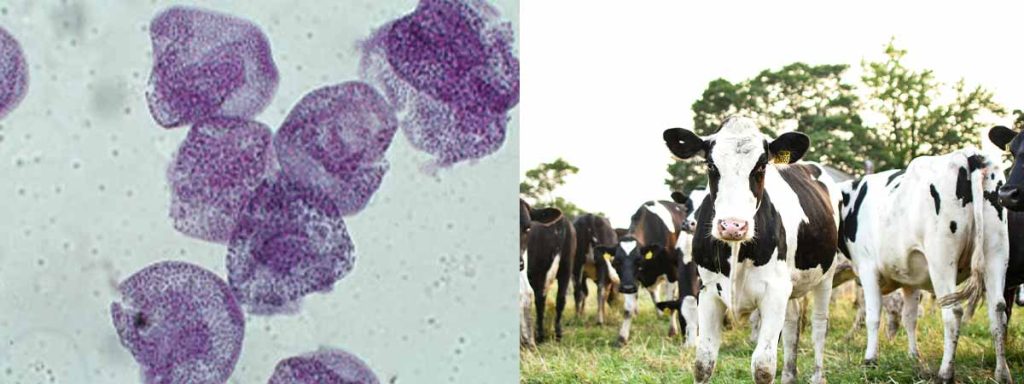
Somatic cell counts play a critical role in udder health and milk quality. Fresh cows after calving show higher SCC levels, with a geometric mean of 593,000 cells/ml at calving and a decrease to 126,000 cells/ml by the sixth milking.
Elevated SCCs often lead to decreased milk production and increase risks for periparturient diseases, such as retained placenta and ketosis.
- Industry standards recommend using the California mastitis test paddle for quick mastitis detection and monitoring SCC in fresh cows to protect herd health.
Key Takeaways
- Maintain clean and dry bedding to limit bacterial growth and support udder health.
- Standardize milking procedures to ensure hygiene and reduce the risk of infections.
- Conduct regular SCC testing to monitor udder health and detect mastitis early.
- Cull cows with high SCC to improve overall herd health and milk quality.
- Manage cow comfort and reduce stress to lower SCC and enhance milk production.
Hygiene to Reduce Somatic Cell Counts
Clean Bedding and Stall Management
Clean bedding and proper stall management help reduce somatic cell counts in fresh cows. Farmers keep bedding areas dry to limit bacterial growth. They remove soiled bedding daily and replace it with fresh material. Fans and sprinklers require careful management to avoid wet stalls and dirty cows. Employees monitor stalls for moisture and cleanliness. Regular cleaning prevents infections and supports udder health. A table below summarizes key actions for bedding management:
| Action | Frequency | Purpose |
|---|---|---|
| Remove soiled bedding | Daily | Reduce bacteria |
| Add fresh bedding | Daily | Maintain dryness |
| Check stall moisture | Twice daily | Prevent wet conditions |
| Clean stalls | Weekly | Deep cleaning |
Milking Hygiene Practices
Milking hygiene practices play a vital role in controlling somatic cell counts. Workers wear disposable gloves and change them as needed. They strip cows before milking to stimulate letdown and check milk consistency. Proper timing for teat disinfection and milking unit attachment ensures effective cleaning. Employees avoid reattaching milking units unless necessary. They check for proper attachment to prevent air leaks. Training helps workers identify mastitis cases quickly. Handling cows in a low-stress environment protects teat integrity and milk quality.
Tip: Consistent milking routines and equipment maintenance help reduce somatic cell counts and limit infections.
Fly Control and Infection Prevention
Fly control measures support infection prevention in fresh cows. Kumari et al. (2019) found that herbal fly control methods significantly lowered sub-clinical mastitis cases. Farmers use fly repellents and maintain clean environments to discourage flies. They monitor cow areas for fly activity and apply control strategies as needed. Reducing flies limits the spread of bacteria and helps protect udder health. These steps contribute to lower somatic cell counts and healthier cows.
Monitoring Somatic Cell Counts and Mastitis
Individual SCC Testing and CMT
Farmers use individual cow SCC tests and the California Mastitis Test (CMT) to monitor udder health in fresh cows. A somatic cell count tester provides a quick and reliable way to measure somatic cell counts in milk. Healthy cows usually have somatic cell counts between 10,000 and 100,000 cells/mL. When counts rise above this range, it often signals infection. The CMT, performed on day 3 after calving, helps detect early signs of mastitis and predicts future milk production. The CMT shows strong accuracy, with a sensitivity of 0.79 and a specificity of 0.95. Farmers should use a CMT score of trace or higher as a sign to investigate further. Regular testing allows for early intervention and helps maintain milk quality.
Tip: Early detection with a somatic cell count tester or CMT can prevent long-term udder health problems.
Identifying High SCC Cows
Identifying cows with high SCC is essential for herd health. Farmers review individual cow test results from Dairy Herd Improvement Association (DHIA) milk testing. They also check monthly milk quality tests and bulk tank cultures to spot trends. By collecting and submitting milk samples for culture, they can find the bacteria causing high somatic cell counts. Farmers observe cow hygiene and stall cleanliness to link behavior with infection risk. Quick identification of high SCC allows for targeted management and reduces the spread of infection.
- Monitor DHIA test results monthly
- Collect milk samples for culture
- Observe cow hygiene and stall conditions
Pathogen Detection and Isolation
Pathogen detection and isolation play a key role in controlling mastitis. Farmers analyze milk samples to identify specific bacteria linked to fluctuating somatic cell counts. For example, the presence of Corynebacterium bovis often leads to persistent infections. By isolating affected cows, farmers limit the spread of infection within the herd. Understanding which pathogens are present helps guide treatment and management decisions. This targeted approach supports better udder health and reduces the risk of mastitis outbreaks.
Milking Procedures to Reduce Somatic Cell Counts
Consistent Milking Routine
A consistent milking routine helps maintain udder health and lowers somatic cell counts. Workers should provide a low-stress environment for animals during milking. Each step in the process matters. They use a clean towel for each animal to wipe teats, which reduces the risk of spreading bacteria. Pre-dipping teats for at least 30 seconds disinfects the area. Forestripping each quarter removes milk that may contain high somatic cell counts. After wiping teats to remove the pre-dip, workers attach the milker correctly to avoid air leaks. Post-dipping immediately after milking and allowing animals to stand for 10-15 minutes further protects against infection.
Tip: A calm and predictable routine reduces stress and supports healthy milk production.
Equipment Maintenance

Proper equipment maintenance is essential for controlling somatic cell counts. Workers keep milking equipment in good working order by following a regular maintenance schedule. They check performance and replace rubber parts at recommended intervals. Consistent and thorough cleaning of the system prevents bacterial buildup. A table below outlines key maintenance actions:
| Task | Frequency |
|---|---|
| Inspect equipment | Weekly |
| Replace rubber parts | As recommended |
| Clean system thoroughly | After each use |
| Performance check | Monthly |
Regular attention to equipment ensures effective milking and reduces the risk of mastitis.
Pre-Milking Teat Prep
Pre-milking teat preparation plays a vital role in mastitis prevention. Workers strip animals before milking to stimulate letdown and check milk consistency. They apply pre-dip and allow it to remain for at least 30 seconds to kill bacteria. Wiping teats thoroughly ensures the pre-dip is removed before milking. Proper timing and technique during this step lower the risk of infection. Avoiding air leaks during milking also helps protect udder health. These steps, when performed correctly, support lower somatic cell counts in fresh cows.
Cow Management for Mastitis Prevention
Culling Chronic High SCC Cows
Culling cows with chronic high somatic cell counts improves herd health and lowers mastitis risk. Dairy managers review SCC records and identify animals with persistent high counts. Removing these cows from the herd reduces the prevalence of subclinical mastitis and improves bulk tank SCC. The following table summarizes the impact of culling:
| Evidence Type | Description |
|---|---|
| Correlation | Bulk tank SCC strongly correlates with subclinical mastitis in dairy herds. |
| Culling Impact | Removing affected cows lowers herd SCC and decreases mastitis cases. |
Prompt culling supports a healthier herd and better milk quality.
Dry Cow Therapy
Dry cow therapy protects cows during the non-lactating period and reduces infections at freshening. Studies show that treated cows have lower odds of developing intramammary infections after calving. This therapy is highly effective against common mastitis pathogens:
- 90-93% effective against subclinical Streptococcus agalactiae
- 70-80% effective against Staphylococcus aureus
- 70-90% effective against environmental streptococci
Monitoring SCC after calving helps managers evaluate the success of dry cow therapy. Strategic treatment during the dry period leads to lower SCC in early lactation.
Cow Comfort and Stress Management
Cow comfort and stress management play a vital role in mastitis prevention. Poor comfort increases SCC and reduces milk production. Social stressors, such as pen moves and overcrowding, impair immunity and raise SCC. Managers provide clean bedding, proper ventilation, and minimize disruptions to support cow health. Effective stress management lowers SCC and improves overall well-being.
- Clean, dry bedding
- Adequate space and ventilation
- Minimized pen moves
Managing Heat and Environmental Stress
Somatic cell counts rise with temperature and humidity. Environmental stress from high summer temperatures causes elevated SCC for weeks or months. Cows experience more stress in hot conditions, leading to decreased production and increased mastitis risk. High stress hormones weaken immune defenses and raise SCC. Even mild weather can cause heat stress if ventilation is poor.
Managers use fans, sprinklers, and shade to reduce heat stress. They monitor cow behavior and adjust housing to maintain comfort. These steps help control SCC and prevent mastitis during challenging weather.
Conclusion

Dairy managers can control somatic cell counts in fresh cows by following these top strategies:
- Maintain clean, dry bedding to prevent bacteria entry.
- Standardize milking procedures for consistency and hygiene.
- Conduct monthly SCC tests and bulk tank cultures.
- Cull cows with high SCC.
- Treat all quarters at dry-off with approved products.
- Ensure cow comfort during hot weather and control flies.
- Regular hygiene and monitoring prevent mastitis and support udder health.
- Consistent routines and equipment maintenance improve milk quality and farm profitability.
| Key Factors | Description |
|---|---|
| Timing of Milk Usage | Avoid using milk from fresh cows for direct consumption for 5-7 days. |
| Pathogen Testing | Test for mastitis and pathogens during the transition period. |
| Management Strategies | Inspect udders and use on-farm mastitis tests before milk usage. |
High somatic cell counts reduce milk protein and lower farm profits. Dairy managers should review and improve these practices regularly to protect herd health and economic success.
FAQ
What Causes High Somatic Cell Counts in Fresh Cows?
Bacteria entering the udder often cause high somatic cell counts. Dirty bedding, improper milking routines, and stress increase the risk. Farmers monitor hygiene and cow comfort to prevent infections.
How Often Should Farmers Test Somatic Cell Counts?
Farmers usually test somatic cell counts monthly. Early testing after calving helps detect mastitis. Regular monitoring supports herd health and improves milk quality.
Can Stress Affect Somatic Cell Counts?
Stress raises somatic cell counts. Heat, overcrowding, and frequent pen moves weaken immunity. Managers provide shade, ventilation, and stable routines to reduce stress.
Why Is Pre-Milking Teat Prep Important?
Pre-milking teat prep removes bacteria from the udder surface. Workers apply pre-dip and wipe teats thoroughly. This step lowers infection risk and supports healthy milk.
What Should Farmers Do with High SCC Cows?
Farmers often cull cows with high somatic cell counts. Removing affected animals lowers herd SCC and reduces mastitis cases. Managers review records to identify these cows.